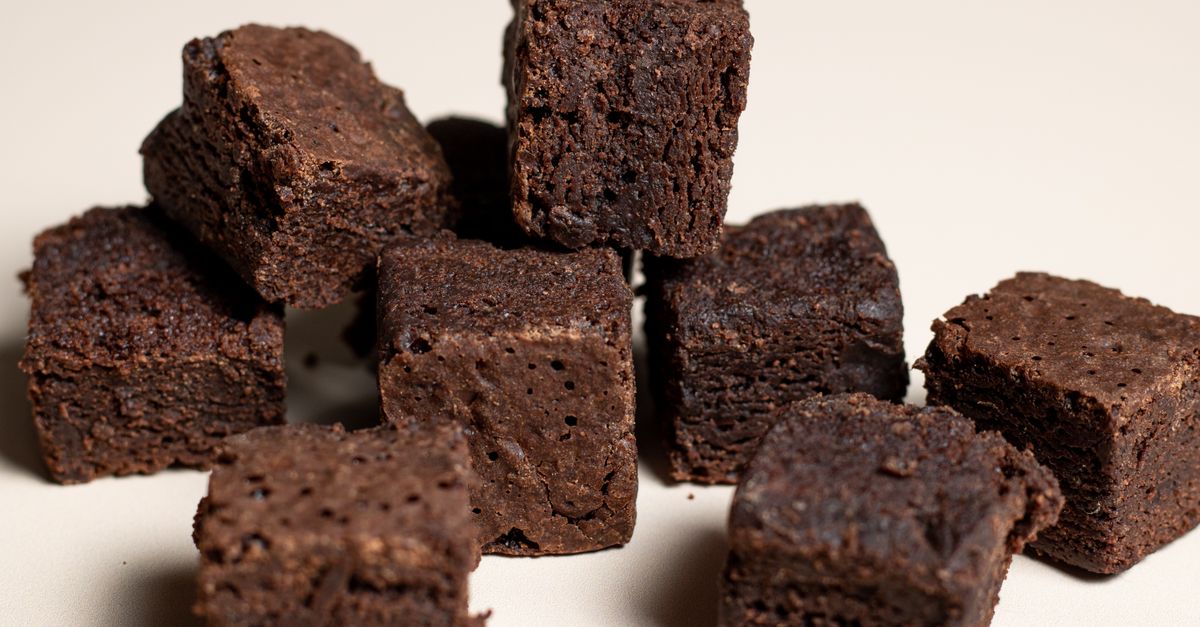
Why Your Homemade Brownies Are Cakey (And The Simple Shifts That Guarantee Fudgy Perfection Every Time)
You’ve just pulled a batch of brownies from the oven, the house smells incredible, and you’re picturing that perfect crackly top giving way to a dense, gooey center. But then, you cut into them, and… it’s cake. Again. Fluffy, dry, and utterly disappointing. You followed the recipe, used good ingredients, but somehow, your brownies consistently lean towards cakey rather than the deeply fudgy squares you crave. I know that frustration intimately because I’ve been there. For years, my brownies were a coin toss – sometimes passable, often just… fine. Never truly fudgy.
What changed everything for me wasn’t a secret ingredient or a fancy pan, but a deeper understanding of ingredient ratios and baking science that most recipes gloss over. It’s not just about what you put in, but how much, and how those components interact. The mistake I see most often, and one I made for far too long, is treating brownie batter like cake batter. They’re fundamentally different beasts, and once you grasp that, truly fudgy brownies become not just possible, but inevitable.
Key Takeaways
- Prioritize fat over flour and use less leavening to prevent a cakey texture.
- Melted butter or oil creates a denser, fudgier crumb compared to creamed butter.
- Control sugar ratios and avoid overmixing to maintain moisture and prevent gluten development.
- Baking at a slightly lower temperature for longer, or pulling brownies out when still slightly underbaked, guarantees a soft, fudgy interior.
The Fat-to-Flour Ratio is Your Fudgy Foundation
The single biggest determinant of whether your brownie is fudgy or cakey comes down to the balance between fat and flour. Cakey brownies often have too much flour or not enough fat, leading to a structure that rises and sets like a cake. Think about it: cakes rely on a balanced structure to hold air and rise, while fudgy brownies aim for a dense, almost collapsed interior.
In my experience, a true fudgy brownie recipe will almost always have a higher fat-to-flour ratio than a cake recipe. This isn’t just about adding more butter; it’s about reducing the structural components that promote cakiness. Many recipes for ‘fudgy’ brownies still use proportions that lean too heavily on flour, creating a drier, more crumbly result. When I started adjusting my flour down by just 10-15% and, crucially, making sure my fat (butter, oil, or a combination) was proportionately higher, the difference was immediate and dramatic. My brownies transformed from acceptable to truly decadent.
Actionable Insight: For every cup of flour, aim for at least 6-8 tablespoons of fat (butter, oil, or a mix). If a recipe calls for more than 1 cup of flour for every 1/2 cup (1 stick) of butter, you’re likely heading towards cakiness. Don’t be afraid to reduce the flour slightly or increase the fat judiciously, especially if you’re using a recipe that consistently disappoints.
Melted Fat vs. Creamed Fat: The Texture Game Changer
This is a subtle but powerful distinction that often gets overlooked. The state of your fat profoundly impacts the final texture of your brownies. When you cream butter and sugar together, you incorporate air, which is the cornerstone of light, airy cakes. This trapped air, along with leavening agents, helps the batter rise.
For fudgy brownies, you want the exact opposite. You want minimal air incorporation. Using melted butter or oil ensures that less air is introduced into the batter. This results in a denser, chewier texture because the fat coats the flour proteins more thoroughly and creates a more cohesive, less airy matrix. When I finally committed to using fully melted (and slightly cooled) butter for my brownies, it was like flipping a switch. The texture became consistently richer and denser, with that signature chewiness that defines a truly fudgy brownie.
Actionable Insight: Always use melted butter (or oil) for fudgy brownies. Melt it gently and allow it to cool slightly before mixing with the sugar and eggs. This avoids cooking the eggs prematurely and ensures the ideal texture without adding unnecessary air.
The Hidden Culprit: Too Much Leavening
Leavening agents like baking powder and baking soda are the workhorses of cakes, creating gas bubbles that expand and give cakes their rise. While a tiny pinch might be acceptable in some brownie recipes, a fudgy brownie actively tries to minimize rise. The goal isn’t to be tall and fluffy, but dense and compact.
Many brownie recipes, especially those adapted from cake recipes, will include a teaspoon or more of baking powder. This is a direct pathway to cakey territory. In my own baking journey, once I understood that my goal was fudginess, I began to scrutinize recipes for leavening. The best fudgy brownie recipes often contain no leavening whatsoever, or at most, a mere 1/4 teaspoon for an entire batch. This subtle absence is what allows the brownie to remain dense and deeply chocolatey, rather than aerated and crumbly.
Actionable Insight: Check your recipe for baking powder or baking soda. If it calls for more than 1/4 teaspoon total for a standard 8x8 or 9x13 inch pan, consider reducing or even omitting it entirely. Trust the rich ingredients to deliver on texture, not a chemical lift.
Sugar and Egg Ratios: The Moisture and Binding Balance
Beyond fat and flour, the interplay of sugar and eggs is critical for moisture and structure. Sugar, being hygroscopic, attracts and retains moisture, contributing to a fudgy texture. Eggs act as a binder and provide structure through their proteins. The trick is getting the balance right to maximize fudginess without creating an overly dense or rubbery result.
Many cakey brownies have either too little sugar (leading to a drier crumb) or an imbalance of eggs that provides too much structure. In my kitchen, I’ve found that using a combination of granulated sugar and brown sugar often yields the best results. Granulated sugar provides the crisp top, while brown sugar’s molasses content adds extra moisture and chew. Additionally, using just enough eggs to bind, without excessive amounts that would create a more cake-like network, is key. Over-beating eggs into the melted butter and sugar can also incorporate too much air, which, as we’ve established, is the enemy of fudginess.
Actionable Insight: Aim for a total sugar quantity that feels substantial but not overwhelming. If your recipe uses only granulated sugar, try substituting up to half of it with light brown sugar for added moisture and chew. When incorporating eggs, mix until just combined, avoiding excessive beating.
The Overmixing Trap and Gluten Development
This is a universal baking truth, but especially crucial for fudgy brownies: do not overmix your batter, especially after adding flour. Gluten develops when flour proteins (glutenin and gliadin) are hydrated and agitated. The more you mix, the more gluten develops, leading to a tougher, chewier (but not in a good way) texture that leans heavily towards cake.
For cakes, a certain amount of gluten development is fine, even desired, to create that tender crumb. For fudgy brownies, you want to minimize it. You want just enough mixing to combine the ingredients. The moment I started mixing my dry ingredients into the wet until just combined—meaning a few streaks of flour might still be visible—my brownies reached a new level of tenderness and fudginess. Those barely-mixed streaks of flour disappear during baking, and you’re left with a perfectly soft interior.
Actionable Insight: After adding the flour (and cocoa powder, if separate), mix on the lowest speed possible or by hand until just combined. Stop as soon as you no longer see large pockets of dry flour. A few small streaks are perfectly fine.
Baking Temperature and Time: The Underrated Controls
Finally, the actual baking process itself plays a huge role. Cakey brownies are often the result of being baked at too high a temperature, for too long, or both. High heat sets the proteins quickly and encourages more evaporation, leading to a drier, more open crumb.
For fudgy brownies, a slightly lower temperature and pulling them out when they are still slightly underbaked is crucial. I usually bake my brownies at 325°F (160°C) instead of the standard 350°F (175°C). This allows the interior to cook more gently, maintaining moisture. And the golden rule for fudgy brownies? When a toothpick inserted into the center comes out with moist crumbs attached, but no wet batter, they’re done. Resist the urge to wait for a clean toothpick – that’s for cake! The residual heat will continue to cook them as they cool, achieving that perfect fudgy consistency.
Actionable Insight: Bake at 325°F (160°C) and check for doneness around the minimum bake time. Look for a toothpick inserted a couple of inches from the edge to come out mostly clean, but the center to have moist crumbs clinging to the toothpick. If it’s completely clean, you’ve gone too far. Allow them to cool completely in the pan before cutting for the best fudgy texture.
Frequently Asked Questions
Q: Can I use oil instead of butter for fudgy brownies?
A: Yes, absolutely! Oil (like vegetable, canola, or a neutral-flavored olive oil) often yields an even fudgier, denser brownie than butter because it’s 100% fat, whereas butter is about 80% fat and 20% water. If a recipe calls for melted butter, you can often substitute with an equal amount of oil for a fudgier result. If a recipe calls for creamed butter, the substitution is more complex as butter’s solid structure is important for aeration.
Q: Why do my brownies have a dry, crumbly edge but a fudgy center?
A: This is typically a sign of slight overbaking, especially around the edges. Different parts of the brownie cook at different rates. To mitigate this, consider lining your pan with parchment paper, which can act as a slight insulator. Also, be sure to pull the brownies when the center is just set, even if the edges look a bit more done. The residual heat will continue to cook them.
Q: My brownies always fall apart when I cut them. What am I doing wrong?
A: The most common culprit is cutting them too soon. Fudgy brownies need time to set and firm up as they cool. They can be quite delicate when warm. For the cleanest cuts and best texture, allow your brownies to cool completely, preferably for several hours or even overnight in the refrigerator. Using a sharp, hot knife (run under hot water and wiped dry between cuts) also helps.
Q: Can I add extra chocolate chips or chunks to my brownie batter without affecting the texture?
A: Yes, adding chocolate chips or chunks generally won’t compromise the fudgy texture, and in fact, can enhance it by adding more pockets of melted chocolate. Just be mindful not to overmix the batter when incorporating them, as excessive mixing can lead to gluten development.
Q: What’s the ideal type of cocoa powder for fudgy brownies?
A: Both natural unsweetened cocoa powder and Dutch-processed cocoa powder work for fudgy brownies. Dutch-processed cocoa powder (which is treated to be less acidic) tends to produce a darker, more intensely chocolatey, and mellow-flavored brownie. Natural cocoa powder is more acidic and is often paired with baking soda to react and create rise. For maximum fudginess and deep chocolate flavor, I often lean towards Dutch-processed or a blend, and then ensure my leavening is minimal or non-existent.
Conclusion
Transforming your cakey brownies into fudgy masterpieces isn’t about magical ingredients or chef-level skills; it’s about understanding the core principles of baking. By paying attention to your fat-to-flour ratio, opting for melted fats, minimizing leavening, balancing your sugars and eggs, avoiding the overmixing trap, and adjusting your baking time and temperature, you’ll consistently achieve that coveted dense, moist, and intensely chocolatey perfection. Don’t be afraid to experiment with these small but significant shifts. Your next batch of brownies could be the fudgiest you’ve ever made. Go forth and bake the brownies of your dreams!
Written by Ben Carter
DIY, home hacks, and sustainable living
With a background in community organizing, Ben is passionate about sustainable living and practical home solutions.
You Might Also Like
Why Your Homemade Gravy Is Lumpy (And What Actually Works for Silky-Smooth Perfection Every Time)
Stop making lumpy gravy! Discover why traditional methods fail and learn the simple, pro techniques for perfectly smooth, rich gravy every time.
Why Your Homemade Sauces Are Gritty, Not Smooth (And The Simple Shifts That Guarantee Silky Perfection Every Time)
Stop settling for gritty sauces. Discover the non-obvious mistakes home cooks make and the simple, professional shifts for velvety-smooth perfection.
Why Your Homemade Pie Crust Shrinks (And The Simple Shifts That Guarantee Perfect, Flaky Edges Every Time)
Stop wrestling with shrinking pie crusts! Discover the simple, often overlooked secrets to perfectly stable, flaky edges that hold their shape.