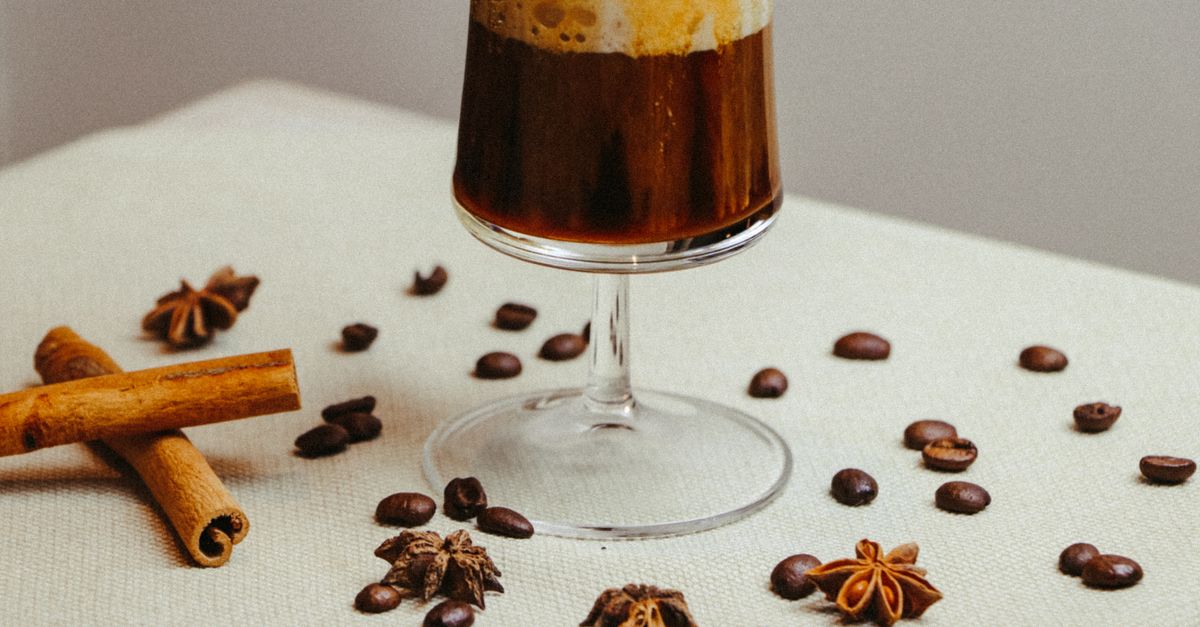
Why Your Homemade Cold Brew is Bitter (And The Pro Secrets for Smooth, Sweet Perfection)
You’ve seen the viral videos, bought the fancy cold brew maker, and envisioned yourself sipping perfectly smooth, café-quality iced coffee every morning. But then you take that first sip of your homemade cold brew, and instead of the mellow, chocolatey notes you craved, you’re hit with an acrid, bitter punch that sends shivers down your spine. What went wrong? Why does your cold brew taste like burnt rubber and sadness, while the one from your local coffee shop is pure liquid gold?
I’ve been there. For years, my cold brew attempts were a cycle of hope and bitter disappointment. I tried different beans, varying brew times, even investing in a seemingly endless array of gadgets. Each batch was a gamble, and more often than not, it was a losing one. The mistake I see most often, and one I certainly made, is treating cold brew like a regular hot coffee you just, well, make cold. The reality is, cold brewing is an entirely different extraction process, and it demands its own set of rules and nuances. What changed everything for me was understanding the why behind the bitterness and making specific, almost counter-intuitive adjustments that finally delivered that coveted smooth, sweet taste.
Key Takeaways
- Your grind size is critical: too fine leads to over-extraction and bitterness; aim for a coarse, uniform grind.
- Water quality matters more than you think; filtered water prevents off-flavors.
- Don’t over-extract: 12-18 hours is the sweet spot; longer doesn’t necessarily mean better.
- Optimize your coffee-to-water ratio; a 1:5 to 1:8 ratio provides a balanced concentrate.
The Grind Size Trap: Why Finer Isn’t Always Better
The most common culprit behind bitter cold brew is, without a doubt, the grind size. We’re often taught that a finer grind extracts more flavor, which is true for hot brewing methods like espresso or pour-over where water passes through quickly. However, cold brew involves a much longer steeping time, typically 12-18 hours. When you use a fine grind for cold brew, you’re creating an enormous amount of surface area for the coffee to interact with the water over an extended period. This leads to massive over-extraction of undesirable compounds, primarily bitter acids and astringent tannins, long before the desirable flavors have fully developed.
In my early days, I’d use my regular drip coffee grinder, which produced a medium-fine grind. I figured, more contact, more flavor, right? Wrong. Every batch tasted like I was chewing on coffee grounds. The solution? Think coarse. I’m talking about a grind size similar to coarse sea salt or even breadcrumbs. You should be able to clearly see individual coffee particles, not a fine powder. A good burr grinder is absolutely essential here because it produces a uniform grind, minimizing the fines (tiny particles that over-extract quickly) which are another major source of bitterness. Blade grinders, unfortunately, just hack at the beans, creating an inconsistent mix of coarse and fine particles, guaranteeing some level of bitterness. Investing in a quality burr grinder was one of the single biggest game-changers for my cold brew consistency. It allows for a slow, gentle extraction of the sugars and oils, leaving the bitterness behind.
The Hidden Impact of Water Quality: It’s Not Just About Purity
Many home brewers focus intensely on bean origin, roast level, and brew time, but often overlook a fundamental ingredient: water. If your tap water tastes even slightly off – perhaps chlorinated, metallic, or simply flat – those impurities will be concentrated and amplified in your cold brew. Cold brewing is a low-temperature, slow process, which means there’s no high heat to flash off volatile chemicals like chlorine. These compounds become an integral part of your final beverage, contributing unpleasant off-flavors that often manifest as bitterness or a chemical aftertaste.
I learned this the hard way after one particularly egregious batch tasted like I’d steeped my coffee in swimming pool water. It wasn’t the coffee, it was my water filter being past its prime. Switching to a high-quality filtered water (not distilled, which lacks essential minerals that aid extraction) or even good bottled spring water made an immediate and noticeable difference. The goal is neutral, clean-tasting water that allows the true flavors of the coffee to shine through, not battle with underlying impurities. Think of it this way: if your water isn’t good enough to drink on its own, it’s definitely not good enough for your cold brew.
The Over-Extraction Fallacy: More Time Isn’t Always More Flavor
There’s a common misconception that if 12 hours is good, 24 hours must be better, and 36 hours even more flavorful. While cold brew is a slow process, there is definitely a point of diminishing returns, after which you begin to over-extract. The sweet spot for most cold brew recipes falls between 12 and 18 hours. Beyond this, you risk pulling out those harsh, woody, and bitter compounds that you’re trying to avoid in the first place. This is especially true if you’re using a finer grind, as discussed earlier.
In my own kitchen, I experimented with everything from 8 hours to a full 48. The 8-hour batches were often too weak and watery, lacking depth. The 24+ hour batches, however, consistently bordered on astringent, with a sharp, unpleasant edge. For my preferred dark roast beans, 16 hours proved to be the magic number. For lighter roasts, I sometimes push it to 18 hours. It’s crucial to experiment within that 12-18 hour window based on your specific beans and grind, but resist the urge to go much longer. Once the desirable flavors have been extracted, the remaining compounds are usually the ones that contribute to bitterness.
Dialing in Your Coffee-to-Water Ratio: The Concentrate Secret
Many beginners make cold brew directly to their preferred drinking strength, leading to weak or imbalanced results. True cold brew, especially the kind you get from a good café, is almost always made as a concentrate. This allows for a more efficient extraction of flavors, as well as versatility in how you serve it. A common ratio for concentrate is 1:5 to 1:8 coffee-to-water by weight (e.g., 100g coffee to 500-800ml water).
When I first started, I used a 1:10 ratio, thinking I wanted less potent coffee. The result was watery and dull, lacking the rich body I loved. Upping the coffee concentration to a 1:6 ratio made a significant difference. It produced a robust concentrate that, when diluted with water, milk, or ice, tasted full-bodied and incredibly smooth. The beauty of a concentrate is that you control the final strength. A stronger concentrate means you can dilute it more, which also helps if you’re using ice, preventing a watery drink as the ice melts. If your cold brew is bitter, trying a slightly stronger concentrate and then diluting it can actually help balance the flavors, as the bitterness becomes less pronounced when spread across more liquid. Don’t be afraid to make it strong; that’s the point of cold brew concentrate.
Proper Filtration and Storage: The Last Steps to Perfection
After painstakingly grinding, steeping, and waiting, the final steps of filtration and storage are often rushed, leading to residual bitterness or compromised flavor. If you’re using a method like a French press, simply plunging won’t remove all the fine sediment. These small particles continue to extract, adding bitterness and a gritty texture to your finished cold brew. Similarly, storing it improperly can lead to stale flavors.
For filtration, I always perform a two-step process. First, I use the coarse mesh of my cold brew system or French press. Then, for a truly clean cup, I filter it a second time through a fine-mesh sieve lined with cheesecloth or a clean coffee filter (slow but worth it!). This removes almost all the fine sediment, ensuring a smooth, clean finish. For storage, cold brew is best kept in an airtight container in the refrigerator. While it can last for up to two weeks, I find the flavor is at its peak within the first week. Anything longer, and it starts to lose its vibrancy and can develop a slightly stale, or yes, even bitter, undertone. Treat your finished cold brew with as much care as you did the initial brewing process.
Frequently Asked Questions
Q: Can I use pre-ground coffee for cold brew?
A: While technically possible, pre-ground coffee is almost always too fine for optimal cold brew. It will lead to over-extraction and bitterness. If you must use it, consider reducing your brew time significantly (e.g., 8-10 hours) and be prepared for a potentially bitter cup. Grinding your own beans coarsely is always the best approach for superior flavor.
Q: Why does my cold brew taste sour instead of bitter?
A: Sourness in cold brew often indicates under-extraction. This can happen if your grind is too coarse, your brew time is too short, your coffee-to-water ratio is too weak, or your water temperature is too cold (though cold brew usually works at room temp, extremely cold water can slow extraction too much). Try increasing brew time, using a slightly finer grind, or adjusting your ratio.
Q: How do I know if my water is good enough for cold brew?
A: The simplest test is to taste it. If your tap water has a strong odor or off-flavor, it’s likely impacting your coffee. A basic Brita filter can help, but for best results, consider a more robust filtration system or use bottled spring water. The goal is clean, neutral-tasting water.
Q: Is it okay to brew cold brew at room temperature or in the fridge?
A: Both methods work, but they produce slightly different results. Room temperature brewing typically extracts flavors faster and can yield a bolder concentrate in less time (e.g., 12-16 hours). Brewing in the refrigerator is slower and often results in a smoother, slightly sweeter concentrate, but may require a longer brew time (e.g., 16-20 hours). Experiment to see which you prefer, but be mindful of the corresponding brew times.
Q: How long does homemade cold brew concentrate last?
A: Stored in an airtight container in the refrigerator, cold brew concentrate typically stays fresh for up to two weeks. However, its peak flavor is usually within the first week. Beyond that, it might start to lose some of its nuanced flavors and could develop a slightly stale taste.
In the journey to perfect homemade cold brew, patience and precision are your best friends. By addressing these common pitfalls—especially the often-overlooked grind size—you’ll transform your bitter brews into smooth, sweet perfection. Your mornings (and your taste buds) will thank you for it.
Written by Maria Rodriguez
Time management, productivity, and consumer tips
A veteran journalist, Maria brings a keen eye for detail and a knack for finding the best deals and little-known life hacks.
You Might Also Like
Why Your Homemade Gravy Is Lumpy (And What Actually Works for Silky-Smooth Perfection Every Time)
Stop making lumpy gravy! Discover why traditional methods fail and learn the simple, pro techniques for perfectly smooth, rich gravy every time.
Why Your Homemade Sauces Are Gritty, Not Smooth (And The Simple Shifts That Guarantee Silky Perfection Every Time)
Stop settling for gritty sauces. Discover the non-obvious mistakes home cooks make and the simple, professional shifts for velvety-smooth perfection.
Why Your Homemade Pie Crust Shrinks (And The Simple Shifts That Guarantee Perfect, Flaky Edges Every Time)
Stop wrestling with shrinking pie crusts! Discover the simple, often overlooked secrets to perfectly stable, flaky edges that hold their shape.